
In today’s tough beauty market, wholesale skincare pricing, skincare pricing strategy, and retail margin optimization stand as main supports for profits among cosmetics distributors and retail brand owners. They deal with changing shipping costs, higher spending on customer acquisition, and shifting tastes. This calls for smart choices in product selection, pricing structures, and inventory sourcing.
To achieve sustainable profitability, distributors must master several core commercial strategies:
- Calculating precise wholesale margins to protect skincare distributor margins and guarantee retail partner satisfaction.
- Structuring effective MSRP strategies that reflect consumer-perceived value.
- Developing high-margin skincare product bundling and beauty product bundling frameworks that increase order values.
- Leveraging multi-SKU skincare sourcing to optimize shipping and inventory costs.
- Partnering with a certified private label skincare manufacturer to ensure product consistency.
To support distributors in executing these strategies, Yingji Cosmetic provides comprehensive OEM/ODM manufacturing, automated production efficiency, and flexible private label skincare MOQ solutions designed to maximize skincare distributor margins across global markets.
Demystifying Wholesale Skincare Pricing and Retail Margin Calculations
Establishing a resilient skincare pricing strategy requires balancing competitive wholesale rates with healthy retail profit margins. Distributors must implement systematic pricing formulas to ensure both their business and retail clients achieve target gross margins.
Standard Margins vs. Tiered Wholesale Pricing Structures
A successful skincare wholesale pricing strategy relies on tiered wholesale pricing models that incentivize larger purchase orders while safeguarding base profit margins.
Distributors should apply the following pricing principles when building their wholesale catalogs:
- Gross Margin Baselines: Aim for a 50% to 70% gross margin on private label skincare pricing to absorb marketing, logistics, and operational overhead.
- Volume-Based Pricing Tiers: Use volume-based pricing across defined volume thresholds, such as 500 units, 2,000 units, and 5,000 units, to encourage high-volume orders while maintaining predictable skincare distributor margins.
- Cost of Goods Sold (COGS) Formula: Calculate wholesale prices using: Wholesale Price = COGS/1 – Target Margin Percentage.
- Landed Cost Accounting: Factor freight, customs duties, and compliance documentation into base COGS before calculating wholesale skincare pricing and wholesale markups.
Establishing MSRP Strategies for Maximum Retail Yield
Setting the Manufacturer’s Suggested Retail Price (MSRP) requires evaluating market positioning, competitor pricing, consumer expectations, and the overall skincare pricing strategy.
Consider these key execution strategies when setting retail price points:
- Keystone Pricing Standard: Set MSRP at double the wholesale price (a 50% retail margin) as the baseline for standard retail stockists.
- Perceived Value Adjustments: Price active-ingredient formulas higher based on consumer perception of efficacy rather than base manufacturing cost alone.
- Promotional Buffer: Build a 15% to 20% discount margin into the MSRP to allow retailers to run promotional sales without undermining retail margin optimization.
High-Margin Skincare Product Bundling Strategies
Skincare product bundling transforms single-item transactions into comprehensive skincare routines, improving average order value while lowering per-unit packaging and shipping overhead. Well-planned skincare bundle pricing can also support stronger profitability across different product categories.
The Power of Routine-Based Beauty Product Bundling
Creating curated regimen sets addresses specific skin concerns and increases consumer adoption of multi-step skincare habits.
Distributors can capitalize on skincare bundle pricing by combining targeted treatments into cohesive product kits:
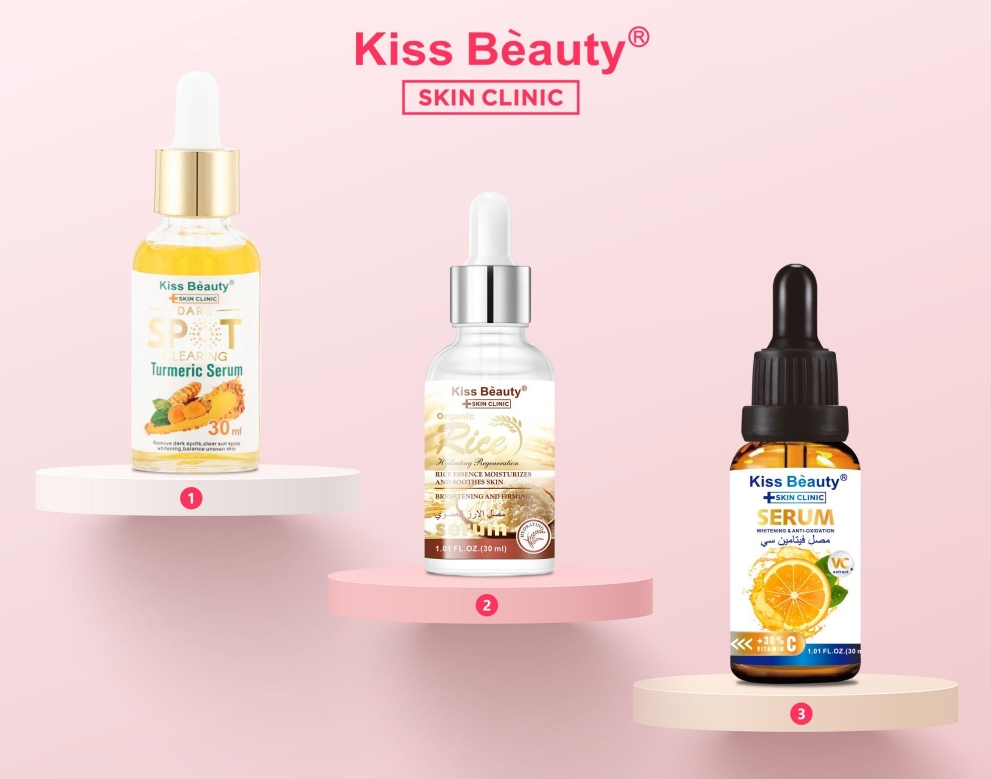
- Targeted Serum Trios: Bundle targeted treatments, such as pairing the Kiss Beauty Skin Clinic Turmeric Serum (dark spot clearing), Kiss Beauty Skin Clinic Rice Serum (hydrating and soothing), and Kiss Beauty Skin Clinic VC Serum (antioxidation and brightening) into a complete treatment regimen.
- Routine Efficacy: Use beauty product bundling to solve consumer choice paralysis by offering ready-to-use morning and evening routine kits.
- Margin Expansion: Sell bundles at a 10–15% discount compared to individual MSRPs while maintaining higher overall gross profit per package.
Cross-Category Bundling to Drive Multi-SKU Sourcing Profitability
Expanding skincare product bundling beyond single categories allows distributors to optimize inventory turnover across fast-moving and high-margin SKUs.
Effective cross-category bundling techniques include:
- Cleanser & Serum Combos: Pair high-margin facial serums with daily essential cleansers or facial scrubs to drive volume replenishment.
- Face & Body Integration: Combine facial skincare sets with nourishing body oils or hand and foot care products to expand brand touchpoints.
- Inventory Balancing: Combine high-volume, lower-margin items with high-margin treatment serums to protect total bundle profitability.
- This approach connects multi-SKU skincare sourcing with a stronger skincare product mix strategy, helping distributors balance revenue, inventory turnover, and category coverage.
Overcoming Supply Chain and Manufacturing Bottlenecks
A successful skincare product mix strategy requires a reliable manufacturing partner capable of delivering consistent product quality, regulatory compliance, flexible order quantities, and competitive private label skincare pricing.
Streamlining Sourcing with Flexible Private Label Skincare MOQs
High Minimum Order Quantities often tie up operational capital and restrict a distributor’s ability to test new product lines. Selecting the right private label skincare MOQ therefore directly affects inventory flexibility.
Working with an adaptable private label skincare manufacturer solves critical inventory challenges through:
- Reduced Inventory Risk: A lower private label skincare MOQ allows distributors to test market response to new skincare product bundling ideas without overcommitting capital.
- Agile SKU Expansion: Rapidly introduce seasonal bundles or trending formulations to meet evolving retail market demand.
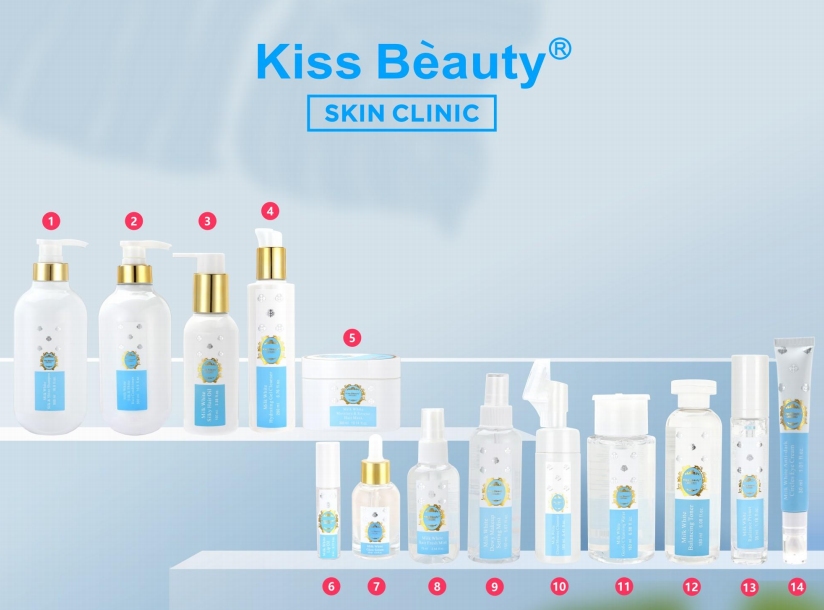
- Cost-Efficient Multi-SKU Sourcing: Multi-SKU skincare sourcing consolidates facial cleansers, serums, and body care items under one manufacturing umbrella to reduce freight costs and administrative complexity.
A flexible MOQ structure also allows distributors to combine tiered wholesale pricing and volume-based pricing with gradual product-line expansion.
Industrial Precision: Automated Production and Certified Quality
Return rates and quality discrepancies can be directly attributed to losses in profit margins for skincare distributors. Strict quality control ensures the bottom line as well as safeguarding the brand reputation.
Yingji Cosmetic takes manufacturing processes seriously by adhering to all production processes:
- ISO 22716 GMP Certified: The factory strictly follows international Good Manufacturing Practice for Cosmetics (GMP certified by Bureau Veritas), thus complying with global standards for export.
- Automatic Filling Lines: Fast automatic filling lines for liquids, creams, and emulsions offer exact dose control and consistency per batch produced.
- End-to-End OEM/ODM Services: Offering services from formula R&D and procurement of ingredients to packaging and delivery, this approach reduces time to market along with competitive skincare private label pricing.
Conclusão
Retail margins grow when distributors align wholesale skincare pricing, skincare wholesale pricing strategy, MSRP planning, and strategic beauty product bundling. Using targeted serum sets, suitable skincare bundle pricing, and an experienced private label skincare manufacturer improves retail margin optimization while reducing supply chain risks and adding value for retail partners.
Partner with Yingji Cosmetic for High-Margin Skincare Solutions
Ready to optimize your skincare product mix strategy and strengthen skincare distributor margins? Yingji Cosmetic offers custom OEM/ODM formulation, flexible private label skincare MOQ options, ISO 22716 certified quality, multi-SKU skincare sourcing, and a diverse range of skincare and cosmetics products.
Contact our OEM/ODM team today to request product samples, custom catalog pricing, and private label project consultation!
FAQ
Q: How do tiered wholesale pricing models benefit beauty distributors?
A: Tiered wholesale pricing and volume-based pricing push retailers toward bigger orders. Unit costs drop once orders reach set quantity levels. Distributors keep their core profit margins intact at the same time.
Q: What is the optimal margin target for private label skincare distribution?
A: Distributors should target gross profit margins of 50% to 70% on private label skincare pricing. That range covers everyday costs like marketing, logistics, stock holding, and retail promotions.
Q: How does skincare product bundling increase retail profitability?
A: Skincare product bundling lifts Average Order Value (AOV). Shipping costs per unit come down as well. Shoppers pick up full routines instead of single items. Solid skincare bundle pricing adds to gross profit on each sale.
Q: Why is ISO 22716 certification important when selecting a private label skincare manufacturer?
A: ISO 22716 certification confirms a private label skincare manufacturer follows Good Manufacturing Practices (GMP). Products stay safe, batches stay consistent, and global rules become simpler to meet.