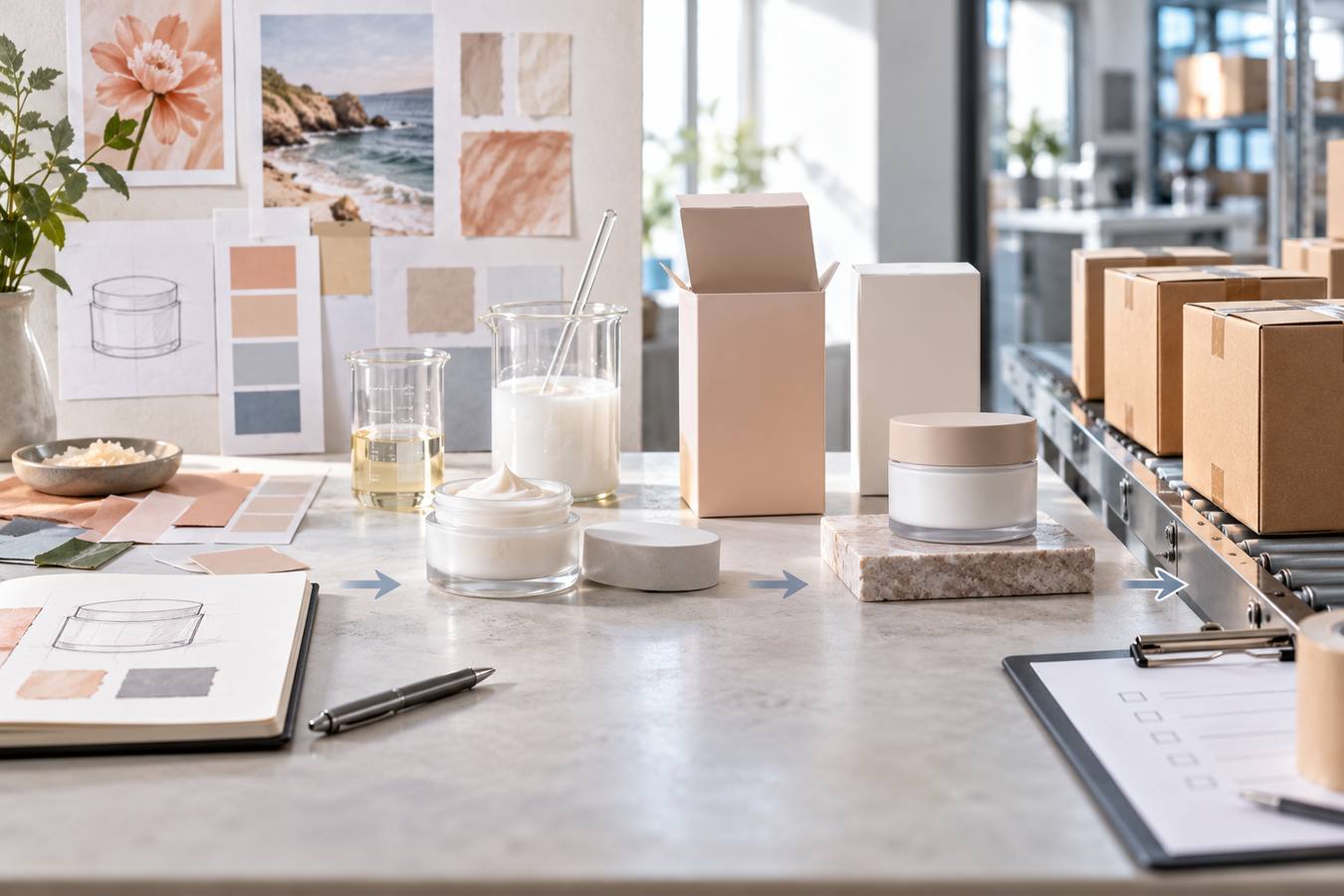
Launching a successful private label skincare brand requires many careful decisions. In order to complete a project as efficiently as possible, it is best to plan out and finalize the most critical aspects of the product, packaging, labeling, and the quantity that you will need to order before moving on to the next step. This 10-step roadmap outlines the key decisions that a brand needs to make and what the brand can expect from the OEM/ODM manufacturer along the way. It also outlines the evidence required to support each stage and confirms what can be expected before the first commercial batch is produced. This guide is aimed at founders and retailers of private label skincare.
Stage 1: Turn the Idea Into a Commercial Brief
Start with your customers’ problems, not with the ingredients you like. Define who your customers are and how they will use the product. Consider the finish, packaging, suggested retail price, distribution, launch date, and more. Only list ‘vegan’ and ‘fragrance-free’ to name two examples as key requirements if they are core to your brand positioning.
A good brief should answer these five questions:
- Who is the target audience?
- How does the product fit into a daily routine?
- What results should the user feel or see?
- Which channels will you use for sales?
- What is your budget for the first order and subsequent costs?
This information can help a manufacturer define the best route. This could be a ready-made base, a modified version of an existing base, or even a completely custom formula. Defining the best route early on can prevent conflicts with the price and packaging of samples that you have already made.
Stage 2: Choose the Right Formula Development Route
Not every private label product is made with a basic stock formula. The standard options can save a lot of time, and they eliminate much risk. A semi-custom formula would allow for scent, color, and texture modifications, but a fully custom formula is where the true identity of your product is realized. These formulas require a lot of development time and typically require a large commitment from the business.
When you are comparing options for product launches, you should look at speed of delivery, uniqueness of the product, and minimum order quantity (MOQ). A simple story behind a product can be better for a first launch than a complex formula that you risk spending the whole of your budget on before testing in the market.
We have developed a number of multifunctional private label products which offer several benefits in one. We use current trends to develop briefs for new concepts and check price points before starting to develop.
Stage 3: Request, Evaluate and Approve Samples
For each sample you test, you must provide detailed feedback. Comments like ‘it feels better’ are not very helpful. Specify exact improvements like ‘reduces sticky feel’ or ‘improves spreadability’. Test for smell, for absorption, and for interaction with the container.
Sampling your final formula is where you start to create your rules. Record all versions and changes requested. Approve the final version that works best for you, and that will be your first skincare production sample.
Do not approve a formula based on a small jar test if the final product is a pump or spray. You must test the formula in combination with the delivery system.
Stage 4: Treat Packaging as Part of the Product
When choosing packaging for a product, form and function should be taken into consideration. Controlling the amount of product that is released, protecting the product from air and bacteria, and ensuring that the item is safely delivered are all aspects of packaging. A thick cream, for example, would not work in a pump that is designed for thin liquids. The packaging material must match the product formula; otherwise, the color or scent may change.
Request for further technical details and for production samples to test. Check the fill height, the type of closure, and the outer box size. If you fill different products in the same bottle, you might save some money, but you have to calculate the savings before ordering different colors or types.
Read our cosmetic stability testing guide for more information on the technical checks involved, and how heat and moisture affect packaging.
Stage 5: Lock Claims, Labeling and Compliance Inputs
Changes to marketing claims require changes to the formula’s construction and to the acceptable data. It is wise to decide upon the claims to be made in marketing prior to commencing work on the packaging artwork. In the US, you can make claims regarding cleaning and moisturizing but not treat disease with a cosmetic.
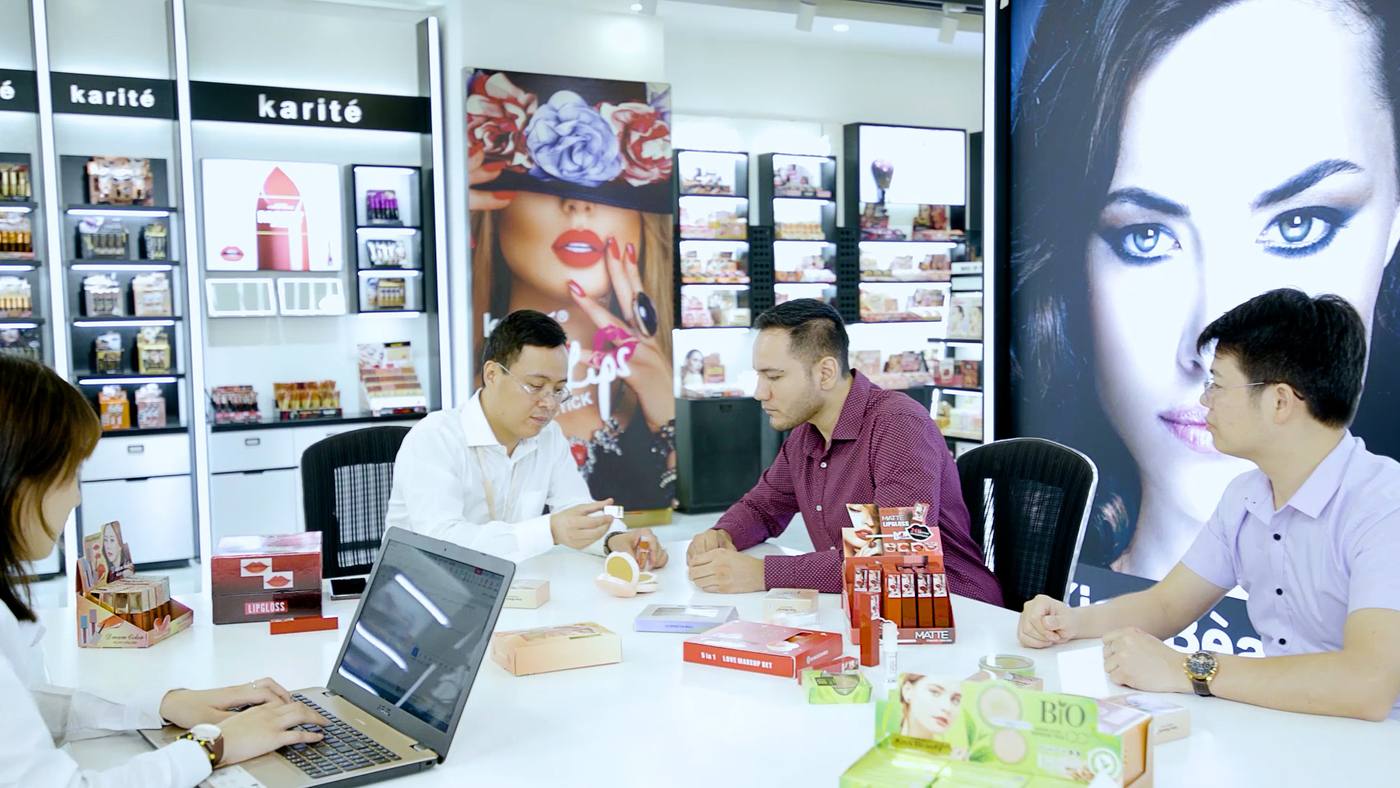
Product name, weight, list of ingredients, directions to use product, and any necessary warnings. For sales in the US, products must comply with MoCRA regulations. You can use our pre-manufacturing verification checklist to help organize information.
Work to strict artwork processes. Check all text, all barcodes, and inspect print against a physical sample rather than relying on a digital image to establish correctness.
Stage 6: Build the Test and Approval Plan
Testing for products made with nutritional formulas can vary based on the formula itself and intended sales. Documentation regarding the quality of ingredients, shelf life, and safety is typical, as well as information to support any special claims made on product labels.
Get agreement with your partner as to which of your tests can run concurrently to get back on track with the project. Insist that the manufacturer defines the pass/fail criteria for each test. “Stable” is not enough – produce the data.
Stage 7: Plan the First Order Around Realistic Sell-Through
The cheapest unit price is not necessarily best for a new brand. Plan your first order based on your sales projections for the first month. Calculate how long it will be before you need to re-order and factor in the cost of shipping.
We have a framework to work out MOQs for private label skincare, and can work out the numbers to see if starting with fewer items would be okay, or if using the same packaging for other products would lower the risk for you.
Stage 8: Approve the Pre-Production Sample
Take a look at your final sample before the machines start running. Ensure that your finished product looks exactly like it’s going to look on the shelf. Check the scent, the position of the print, and the fold of the box. These are the types of errors you can pick up before they happen.
Use a checklist for this approval. Even very small issues should be recorded on the checklist, and it should be clear who can finally authorize the production run. Both brand and factory should then be on the same page.
Stage 9: Control and Document the First Production Run
It’s also a good idea to record the production of the first batch of the new product, listing the ingredients used, the various mixing stages, and subsequent tests. The batch number must also be verified and clearly printed on all bottles and boxes.
What if a batch of goods does not conform 100% to the agreed rules? You need to have thought this through beforehand and have a clear procedure in place to deal with any problems that may arise. It must not be something that is decided upon in anger after the goods have been completed.
Stage 10: Plan Reorders and Post-Launch Learning
For the first few months, monitor the sales of the different items, read all the reviews, and check the packaging and shipping. Set a date for your next order before you run out of stock.
Yingji Cosmetics helps develop formulas, packages, and manufactures for brands worldwide. If you’re ready to get going on your idea, send us your concept brief, and we can help develop a plan for the development and first production order of your new product.
Frequently Asked Questions
Q: How long does a private label skincare launch take?
A: The amount of time required will depend on the extent of changes to the formula and the speed of your approval of the artwork. Stock can hit the market very quickly as it is ready to use.
Q: Should I choose the formula or packaging first?
It is best to pick them simultaneously. Formulations need to work with the pump or bottle that you have chosen to make sure the product is user-friendly for customers.
Q: How many samples should I request?
A: It’s better to make precise comments on samples than to make a bunch of unrelated versions of a product until it’s just right. Request samples until the product meets your needs exactly.
Q: Can production begin while testing is running?
A: Yes, some steps can overlap, but they need to be carefully managed. You and your manufacturer must agree on which tests can be completed after the first machines start.
Q: What is the most common first-launch mistake?
A: Many mistakes occur when companies make changes to their design after the labels have already been printed. Implementing an approval process will help you avoid these costly mistakes.